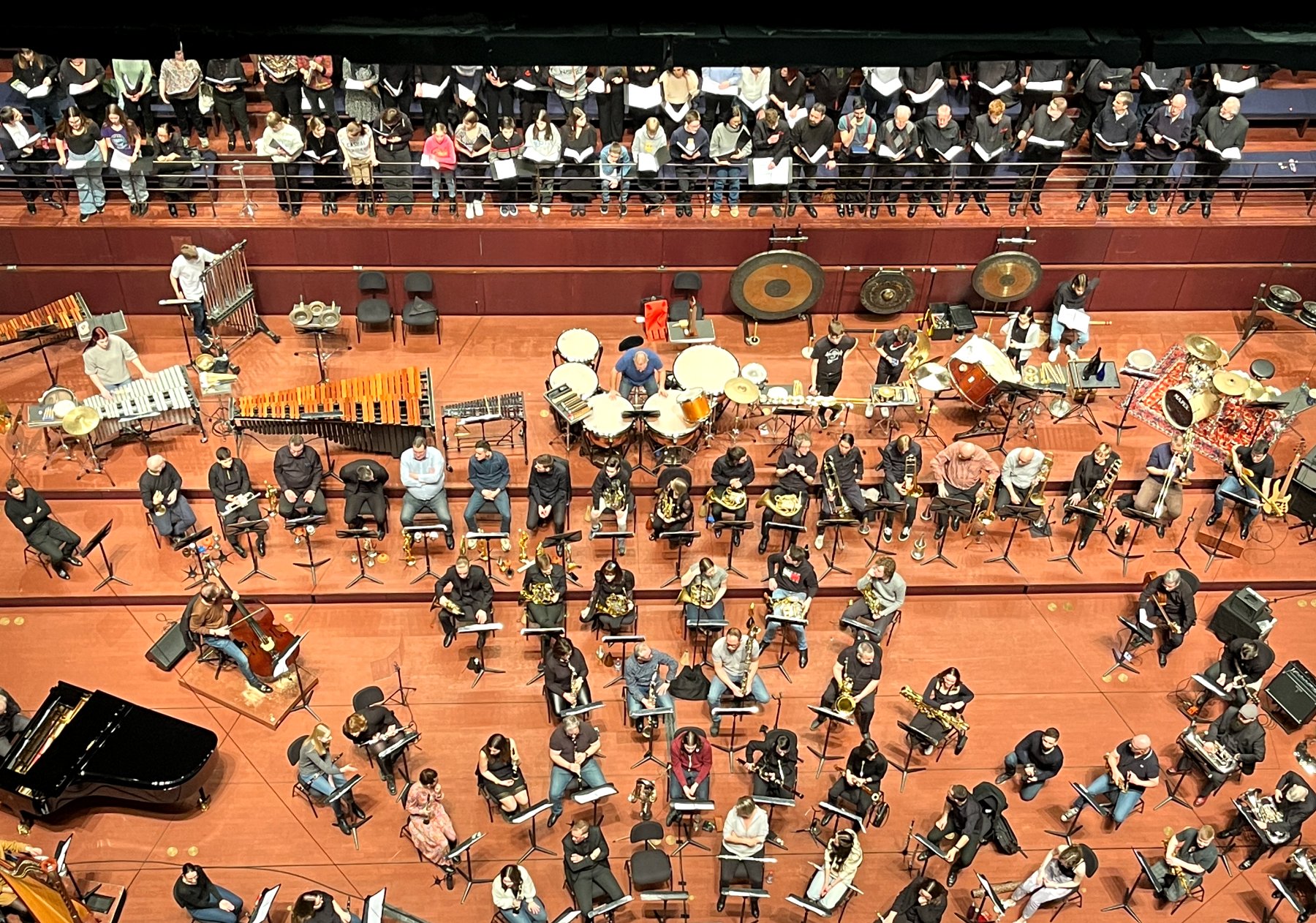
The hall is the first instrument
With large forces the room decides more than any device. Reverberation time, ceiling height, stage area and seating distances determine whether a tutti carries or walls up. Before any scheduling, therefore, comes the choice of venue — concert hall, church or studio — and, where possible, a listening visit to the room.
In Vienna this includes a cooperation with the Lorely-Saal. Which room is right is decided by the forces: what flatters a string quartet is too small for a late-Romantic tutti.
Main system and spot microphones
The main system carries room, depth and balance; the spot microphones add definition where a voice would otherwise disappear. They do not replace the main system. An orchestral recording built from twenty equal individual tracks sounds bigger, but no longer like an orchestra in a room.
All channels are recorded individually. But the decisions are made at the setup — not later at the fader.
Seating and balance
Much of what is laborious in the mix is solved by moving two metres in the hall: wind risers, the distance of the double basses from the back wall, the opening of the piano lid, the position of the harp. Such corrections are agreed with the conductor and the orchestra manager before the first session.
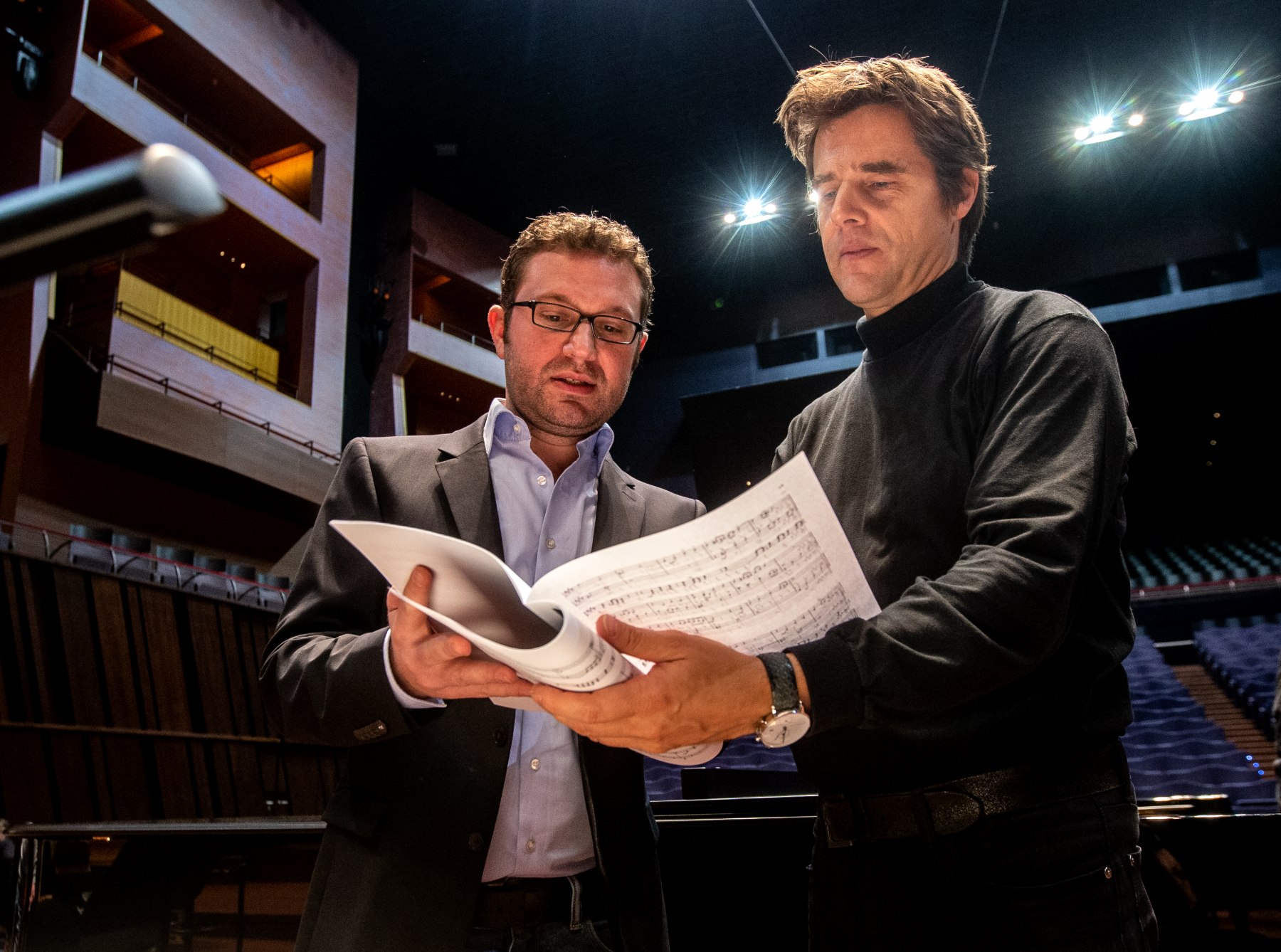
Recording production from the score
Producing a recording means reading along in the score, logging bars, checking joins and being able to tell the conductor which passage is still missing and which takes fit together. That measurably shortens sessions — and prevents the edit from lacking material that nobody can go back for.
Experience with large forces
Recordings and broadcasts with, among others, the Wiener Symphoniker, the Wiener Kammerorchester, the Vienna State Opera Chorus, the Solistes Européens Luxembourg and the Luxembourg Philharmonic.
Collaboration with conductors including Valery Gergiev, Ádám Fischer, Eliahu Inbal, Gustavo Gimeno, Sascha Goetzel, Christoph König, Leopold Hager and Pietari Inkinen. The full list is on the References page (German).
Frequently asked questions
Studio or concert hall?
For orchestra, almost always the hall. A studio that acoustically carries large forces is the exception in Vienna; a good hall is the rule.
How many microphones are used?
As many as necessary, as few as possible: a main system plus spots depending on forces and repertoire. More microphones mean more setup time and more compromises in phase.
Can we record with an audience?
Yes. Then it is a concert recording with the dress rehearsal as safety material — see the Concert recording page.
Who decides which takes are used?
The proposal comes from the recording producer; the decision is made by the artistic director. There is a correction round before the master.
How long does post-production take?
That depends on programme length and the number of takes. The schedule is agreed before the production so that release dates hold.
More services
Enquiries
Please send enquiries via the contact form on the home page — with repertoire, forces, date and venue, as far as already known. MB Records, Vienna.
CONTACT →Next: Classical recording in Vienna · Discography & references